
Slí: Pathways Through the Earthly Crucible. Rebecca Powell.
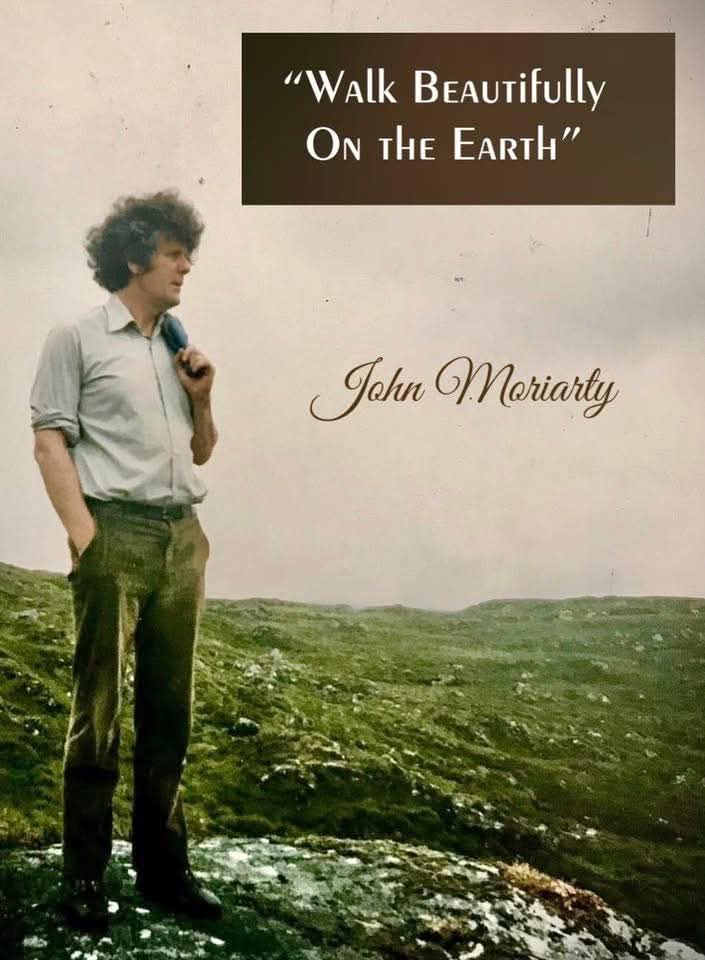
To walk the Irish landscape with the perception of the late mystic and philosopher John Moriarty is to understand that the earth is not a static object to be looked at, but a living, breathing scripture to be entered. Moriarty famously called for a shift from mere superficial sight to a deeper, sacred “beholding”—a way of experiencing the landscape where the boundary between the human soul and the wild earth dissolves entirely. This collection structured around the ancient Irish concept of Slí (the way, the path, the road) and contextualised through traditional Ogham scripts, maps that exact journey of breakdown, surrender, and spiritual transition through the tactile medium of layered textile art.
The two central works in this collection, Slí Idir Saolta and Slí an Alchaimí Daonna, function as visual and material thresholds. They refuse the modern, industrial urge to dominate fabric with synthetic dyes or rigid, forced geometry. Instead, they embrace what Moriarty called Gelassenheit—a radical “letting-be-ness”—by allowing the landscape of Ireland to physically rewrite, stain, and transform the textiles through its own elemental voice.
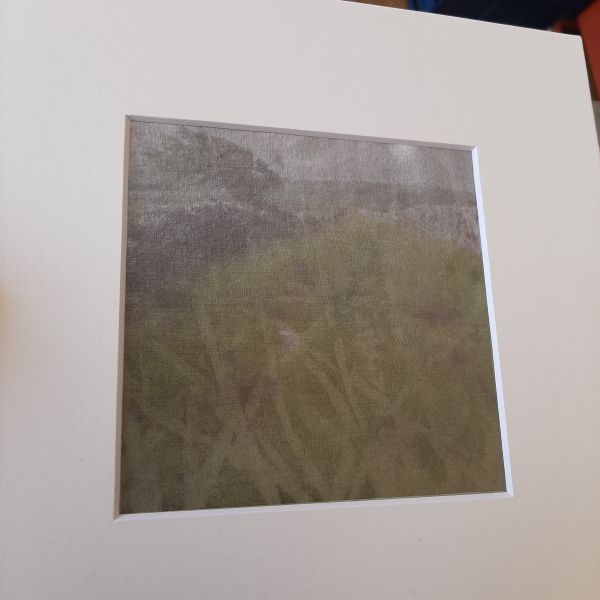
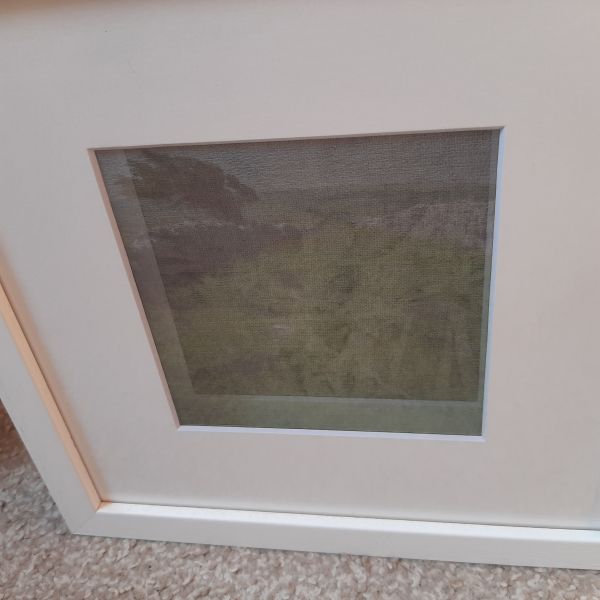
In Slí Idir Saolta (The Way Between Worlds), we are confronted with the classic Moriartian quest for the “thin places”—those rare, fragile geographic nexus points where the veil between the physical world and the mythic Otherworld drops. By printing the image of a green road on the Burren across translucent silk, and suspending it above raw linen steeped in seaweed, the artwork creates a physical void. This gap is not empty space; it is the liminal threshold itself, a silent invitation to look past our superficial, commodity-driven sight and step between worlds.
Below it hangs Slí an Alchaimí Daonna (The Way of Earthly Alchemy), which shifts the narrative from spiritual transition to material crucible. Here, the upper silk layer captures the exposed limestone pavement of the Burren—the stark, pale, unyielding “skeleton of the planet” that Moriarty believed could strip away human ego. Beneath this bone-white stone sits a foundational linen layer that has yielded entirely to ecological alchemy. Transformed by the combined forces of Irish rainwater, wild Atlantic seaweed, and the bleeding, oxidised passage of iron rust water, the fabric becomes a living map of decay, impermanence and rebirth. The rain, the sea, and the metal “do the thinking” for the artist, embodying Moriarty’s philosophy that humanity must step into nature’s forge to be fundamentally altered.
Woven, printed, and stained by the elements, these separate pieces ultimately ask the same question that animated John Moriarty’s entire life: How do we find our way back into communion with the earth? Through the delicate tension of silk and the raw weight of linen, these pieces show that the path is not found by looking at the surface of the world, but by tracing the bleeding, alchemical layers underneath it.
Slí na Fírinne
The Way of Truth
᚛ᚄᚂᚔᚃᚐᚆᚔᚏᚔᚃᚃᚓ (Slí na Fírinne)
Limited Edition Photography Print
Rebecca Powell
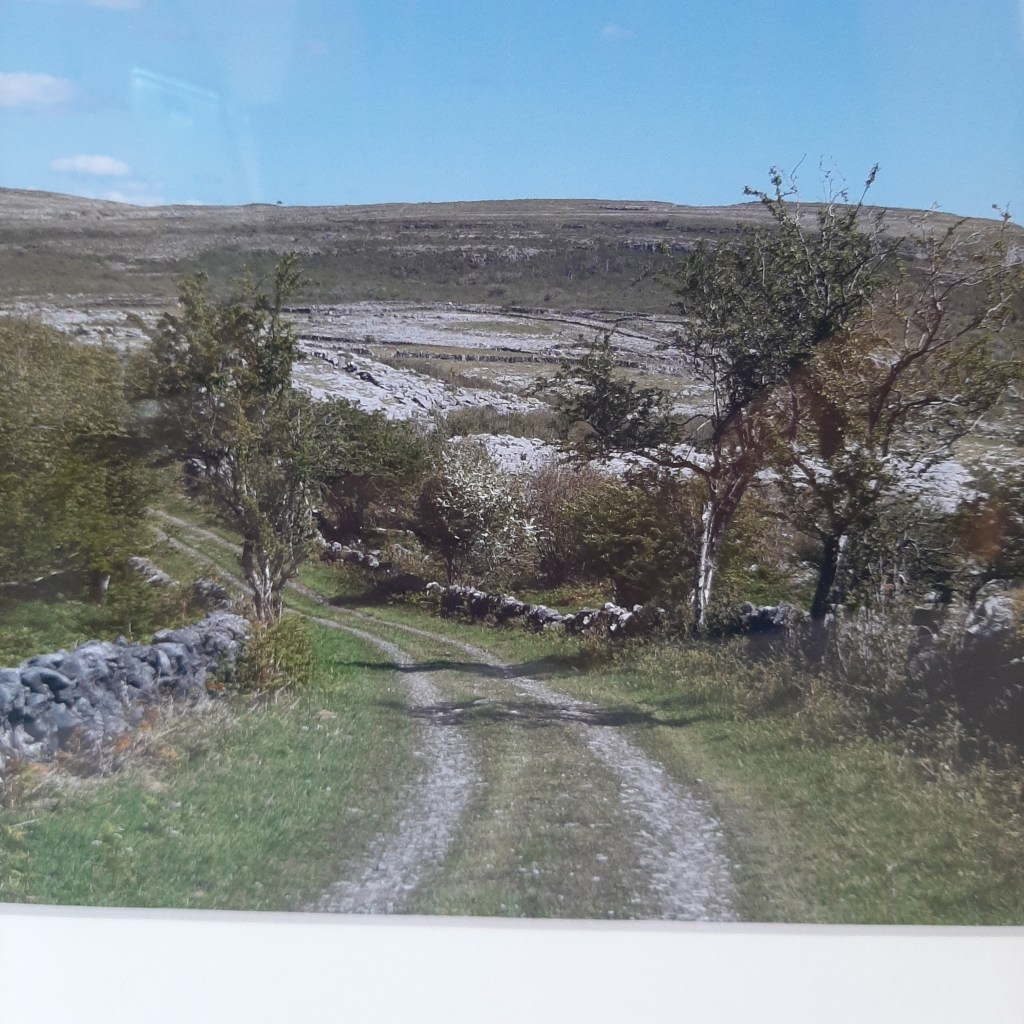
This solitary photographic print grounds the collection’s abstract alchemical philosophies of pieces Slí Idir Saolta and Slí an Alchaimí Daonna into the unyielding truth of the physical landscape. Captured here is a green road on the Burren—a literal Slí slicing through the vast, exposed limestone pavement.
The path is flanked by the stark karst stone and wind-bent and twisted hawthorn trees. In Irish lore, the hawthorn is the traditional guardian of the fairy paths, a sentinel standing at the boundary of the physical and the mythic worlds. Bent by the Atlantic winds, they lean toward the distant mountains rising ahead, guiding the viewer’s eye toward the great horizon.
Through the lens, this image captures exactly what John Moriarty termed Silver-Branch perception—the ability to look at an ordinary geographic scene and behold the grand, ancient cosmos vibrating within it. The road is an invitation; the hawthorn the threshold; the mountains the eternal destination.
When I stood at this point, I was overwhelmed by the vista and what it felt like to be in its physical presence, and yet, I felt completely at one with it.
Title: Slí Idir Saolta (The Way Between Worlds)
᚛ᚄᚂᚔᚔᚇᚔᚒᚄᚐᚑᚂᚈᚐ (Slí Idir Saolta)
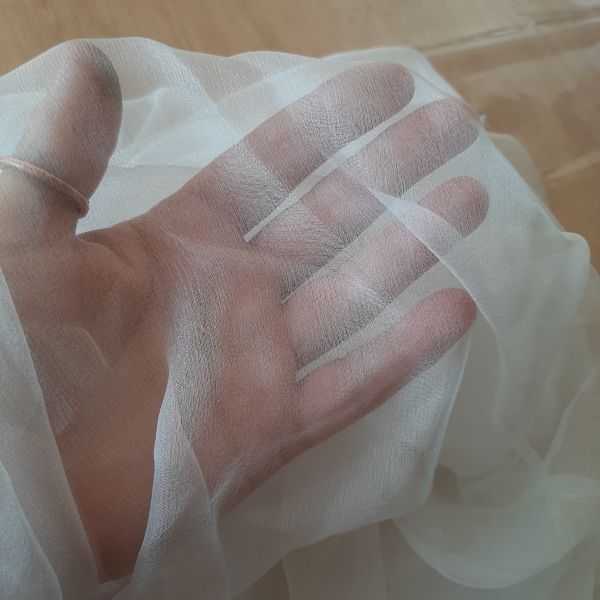
This layered textile artwork explores the liminal thresholds where physical landscapes dissolve into the spiritual realm—the ancient Irish concept of “thin places.” The upper layer, crafted from fine, translucent silk, features a printed image of a green road on the Burren. This represents the pathways of our visible world: delicate, breathing, and rooted in the sacred topography of the Irish earth. Beneath it sits a foundational layer of raw linen, printed with seaweed and organic lines forged through the unpredictable alchemy of eco-printing. This lower layer evokes the ancient, subterranean, and oceanic depths of the ancestors. By physically separating these two textiles, a literal and metaphorical void is created between the silk and the linen. This suspension captures the liminal space itself—the hidden pathway where the veil drops, inviting the viewer to step between the worlds.
This artwork aligns beautifully and profoundly with the philosophy of John Moriarty. He was an Irish writer, mystic, and “Dreamtime philosopher” who believed that modern civilisation has lost its connection to the earth because we try to master and shape it, rather than letting it shape us.
This piece harmonises with his core concepts in several striking ways:
1. “Beholding” vs “Seeing” the Landscape
Moriarty advocated for what he called Silver-Branch perception—shifting our gaze from just “seeing” a physical landscape to truly beholding its sacred, terrifying depths.
- The Alignment: By pairing the literal Burren road (the terrestrial world) with the hidden underlayer of seaweed and rust-infused linen, I am refusing a surface-level view, forcing the viewer to look through the top layer to behold the ancient, subterranean, and oceanic forces beneath it, moving from mere sight to spiritual recognition.
2. Nature as an Alchemical Partner
Moriarty deeply respected the “wildness” of the earth. He famously said, “Tonight I’ll let the river do my thinking for me,” surrendering human control to the natural world.
- The Alignment: My use of eco-printing. Eco-printing is an act of total surrender to natural alchemy. One is not forcing a synthetic image onto the fabric; instead, you are letting the seaweed, cordage, rust, rainwater and the heat “do the thinking”. It perfectly mirrors Moriarty’s philosophy of Gelassenheit (letting-be-ness), where human artifice steps back to let nature create its own sacred patterns.
3. The Geological and Mythic Slí (Way)
Moriarty taught that different time periods and realms are not separate; they blend into one another. He constantly sought to keep the pathway to Connla’s Well (the Celtic Otherworld) open. In fact, before his death, he attempted to found a spiritual hedge school named Slí na Fírinne (The Way/Trail of Truth).
- The Alignment: The title Slí Idir Saolta (The Way Between Worlds) and the physical void between the fabric layers capture exactly what Moriarty spent his life writing about. The void isn’t empty space; it is the liminal, sacred friction where the ancient “Dreamtime” of Ireland meets our modern, physical world.
My choice of materials—fragile, translucent silk on top of ancient, raw seaweed and rust-stained linen—tells the exact story of the “thin places” that John Moriarty lived to protect. It is a flawless artistic interpretation of his worldview.
The process…




Title: Slí an Alchaimí Daonna (The Way of Earthly Alchemy)
᚛ᚄᚂᚔᚐᚃᚐᚂᚔᚏᚐᚔᚋᚔᚇᚐᚑᚃᚐ Slí an Alchaimí Daonna
This piece embodies John Moriarty’s philosophy of total ecological surrender—the belief that humanity must stop trying to dominate nature and instead enter a crucible where the earth alters us.
The upper layer consists of fine silk printed with the bare, exposed limestone pavement of the Burren. This pale karst stone represents the surface world we think we know: structured and visible. Beneath it, the lower layer of raw linen has been yielded entirely to the wild elements. Rather than using human-made dyes, the fabric has been stained, rewritten, and transformed by rainwater, ocean seaweed, and the bleeding oxidation of iron rust water.
The artwork physically manifests Moriarty’s concept of Gelassenheit (letting-be-ness). By allowing the weather, salt, and metal to “do the thinking,” the piece becomes a sacred, layered map of time, decay, and rebirth. It bridges the rigid bone of the earth with the fluid, shifting chaos of the cosmos.
Here is an analysis of how Slí an Alchaimí Daonna (The Way of Earthly Alchemy) harmonises directly with John Moriarty’s core philosophical concepts:
1. The Burren as the Bone of the Earth
Moriarty had a deep, mystical relationship with the Burren. He did not see it as a barren wasteland, but as the raw, exposed “skeleton” of the planet. He believed that walking on its limestone was a way to strip away human ego and touch the ancient mind of the earth.
- The Alignment: By printing the limestone pavement onto fine silk, I have captured this exact Moriarty perspective. The silk is delicate, yet the image it carries is of unyielding, eternal stone. It represents the pale, quiet threshold where human thought stops and the silent, meditative stone takes over.
2. Radical Surrender to the Crucible
Moriarty often spoke about entering a “crucible”—a place of intense alchemical change where human control is broken down so we can be reborn into a wilder, truer state of being. He advocated for a shift from dominion over nature to total communion with it.
- The Alignment: My choice to steep the linen in rust and rainwater and infuse those with the seaweed is a physical act of this communion. One is not forcing a synthetic, human design onto the fabric. Instead, one is placing the linen into the crucible of the elements and stepping back. By letting the iron oxidise and the rain bleed into the fibres, one practices what Moriarty called Gelassenheit—the sacred art of “letting be” and allowing nature to write its own story.
3. The Marriage of the Sky, Stone, and Sea
A central theme in Moriarty’s work is that everything is interconnected; the stars, the rocks, the oceans, and humanity are all part of one single, breathing organism. He loved places where these elements crashed into each other, as do I.
- The Alignment: This artwork physically weaves those elements together. The terrestrial stone of the Burren, the celestial water of the rain, the oceanic life of the seaweed, and the industrial decay of the iron rust. By layering the sky (rainwater) and the sea (seaweed) underneath the mountain stone (limestone), one is reordering the landscape into a cosmic, multi-dimensional map, exactly as Moriarty did in his writings.
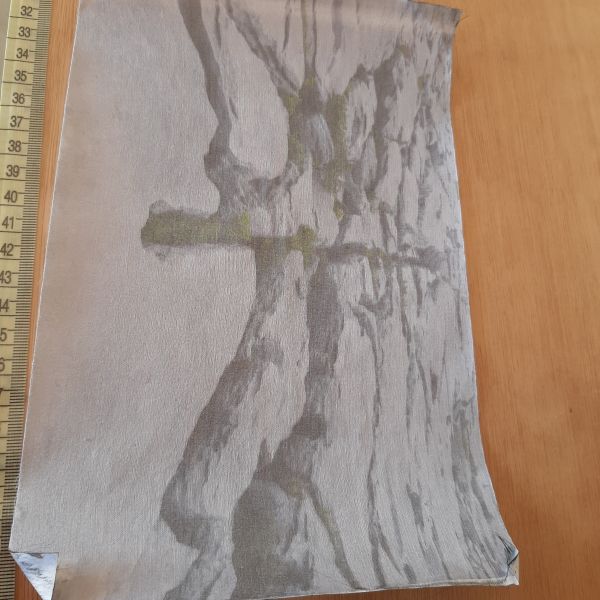

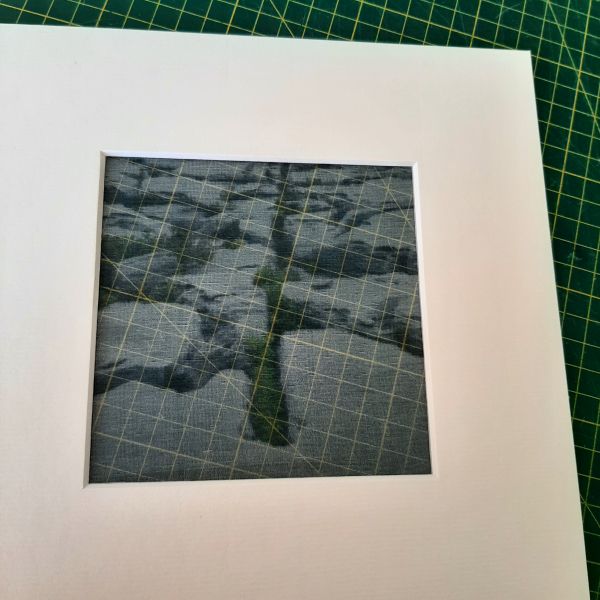
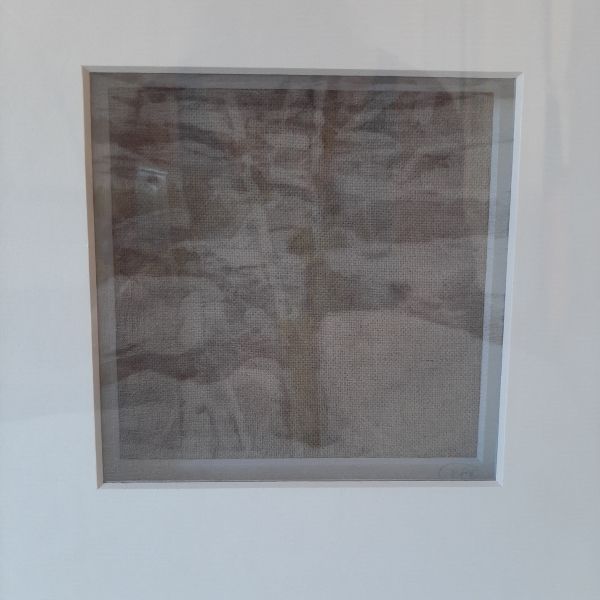
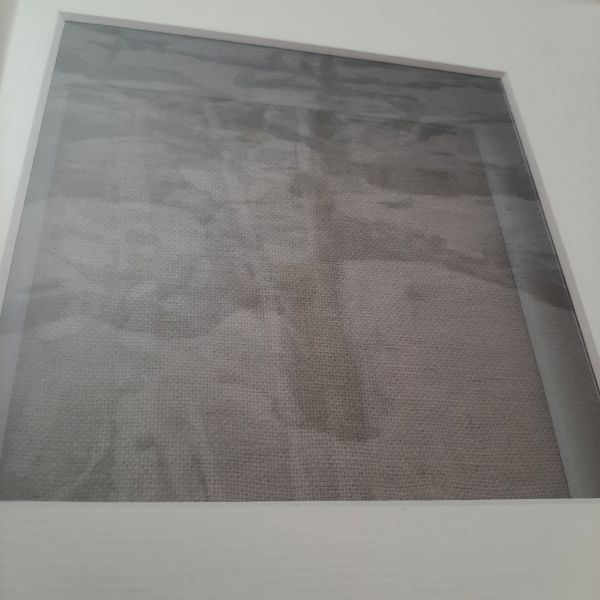
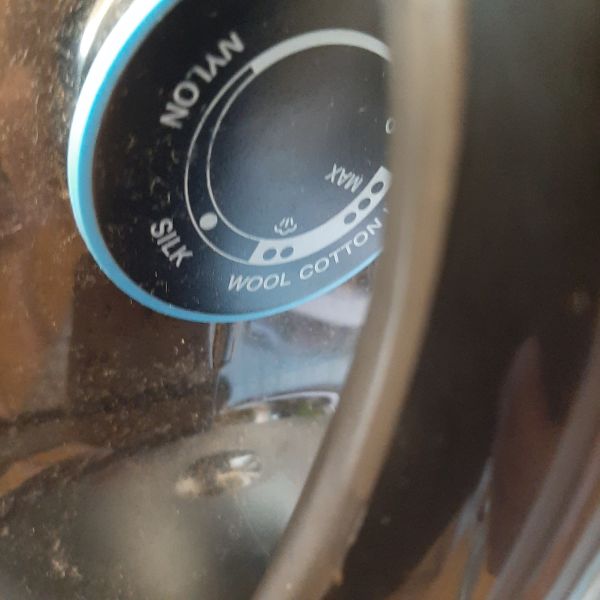
The above images show some of the processes in creating these pieces, the images however do not do justice to the finished pieces as they really need to be seen in person as they change depending on the way you look, from the side or face on.
The linen was eco printed using locally foraged seaweed that was thrown up on the beach after a storm. Rusty metal collected from farmers and old tin cans soaked in rainwater was used to bind the seaweed to the linen in an alchemical process that requires binding the rolled up linen on a cast iron pipe and simmering it in a pot of rust water. the resulting crisscrossed marks are from these bindings. These marks provided me with the perfect layer for these pieces. The images printed onto the silk are ones I took on my visits to this magical part of Ireland.
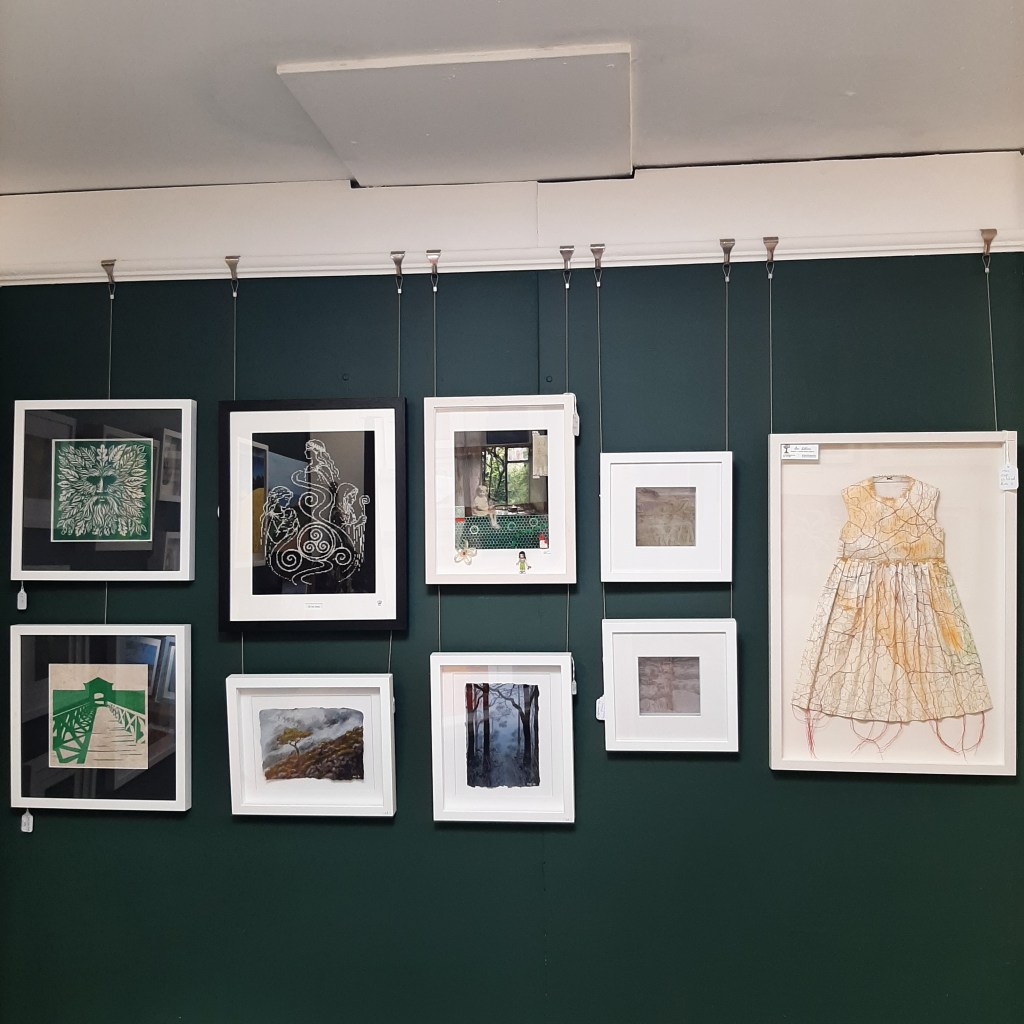
These three pieces are currently on display at West Cork Collective as part of the Members Summer Exhibition.


 Karima Rebecca Powell Artist